Tax Compliance, Risk Management And Climate Resilience Take Centre Stage In Co-operative Sector
By Admin Friday, 27th November 2026
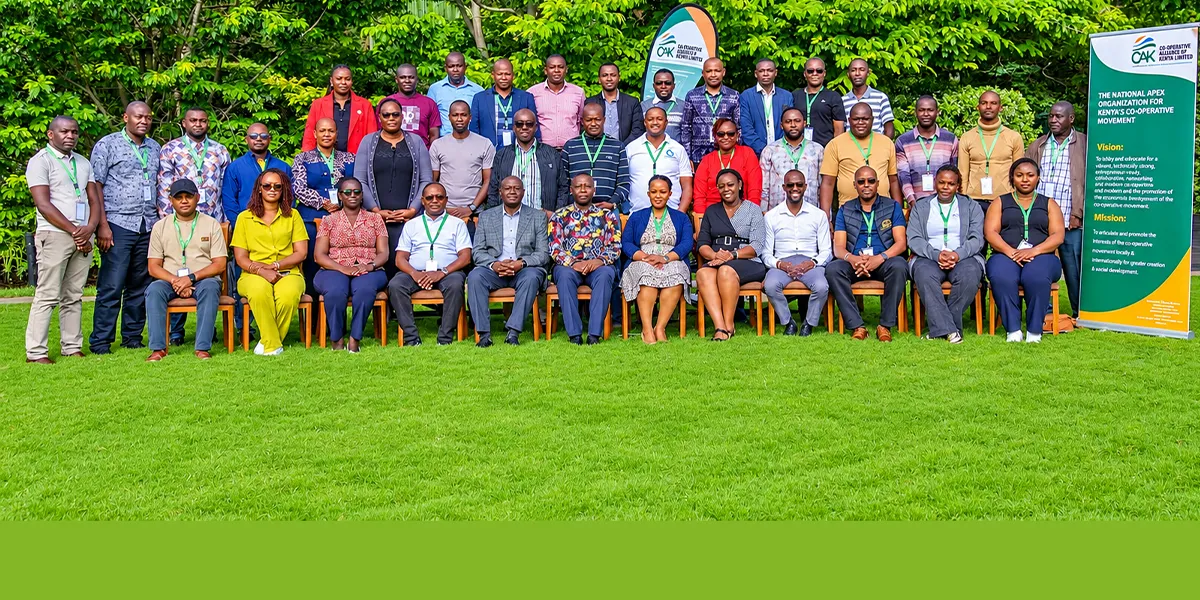
Photo courtesy
The five-day programme at Sawela Lodge, Naivasha, focused on strengthening institutional compliance, governance, risk management and sustainability across SACCOs and co-operative societies.
The Co-operative Alliance of Kenya (CAK) has successfully concluded a five-day capacity-building workshop aimed at strengthening tax compliance, institutional risk management, Environmental, Social and Governance (ESG) practices, and climate resilience among SACCOs and co-operative societies.
Held from 23rd to 27th November 2026 at Sawela Lodge, Naivasha, the workshop, themed Mastering Tax Compliance, Risk Management, ESG & Climate Resilience for SACCOs and Co-operative Societies, brought together professionals and institutional representatives to examine critical issues affecting the effective management and sustainability of co-operative organisations.
The programme addressed emerging regulatory requirements, changing taxation frameworks, institutional vulnerabilities and the growing importance of integrating sustainability into organisational policies and operations.
As Kenya's co-operative movement continues to operate in an increasingly complex environment, institutions must strengthen their internal systems, enhance accountability and develop the capacity to respond effectively to emerging challenges.
Addressing Changing Tax Compliance Requirements
Tax compliance formed a central part of the workshop, with discussions focusing on Finance Act 2026 reforms, digital tax administration, tax audits and dispute resolution.
For SACCOs and co-operative societies, understanding and meeting tax obligations is essential to maintaining sound financial management and ensuring compliance with applicable statutory requirements.
Changes in taxation policies and administration require institutions to regularly review their financial processes, maintain accurate records and ensure that responsible officers understand their compliance obligations.
The increasing use of digital platforms in tax administration has also made it important for organisations to strengthen their financial reporting systems and internal procedures.
The workshop provided an opportunity to examine these developments and the importance of proactive tax management in minimising compliance risks, avoiding unnecessary penalties and promoting institutional accountability.
Strengthening Institutional Risk Management and Internal Controls
The programme also examined institutional risk management, recognising the importance of effective internal controls in safeguarding co-operative resources and protecting members' interests.
SACCOs and co-operative societies operate through various financial and administrative processes that expose them to operational, financial, credit, governance and compliance risks.
Without appropriate controls, weaknesses in these areas can undermine institutional performance, affect members' confidence and expose organisations to financial losses.
Effective risk management requires institutions to identify potential threats, assess their impact and establish appropriate measures to prevent or mitigate them.
Internal controls, including segregation of duties, financial authorisation procedures, regular reconciliations, internal audits and effective reporting systems, are important in promoting transparency and accountability.
The workshop highlighted the importance of coordinated responsibility across Finance, Internal Audit, Credit, Operations and Human Resource departments.
It also reinforced the role of boards of directors and senior management in providing oversight, ensuring compliance with institutional policies and promoting a culture of accountability.
Integrating ESG into Co-operative Governance
Environmental, Social and Governance (ESG) considerations were another key area of focus.
ESG has become an increasingly important consideration for institutions seeking to strengthen sustainability, accountability and responsible business practices.
For the co-operative movement, these principles provide an opportunity to align institutional operations with the broader interests of members, communities and other stakeholders.
Environmental considerations include the management of environmental impacts and the integration of sustainability into institutional activities.
The social dimension focuses on areas such as member welfare, employee relations, inclusion and the contribution of co-operative organisations to community development.
Governance addresses leadership accountability, transparency, ethical conduct, institutional oversight and responsible decision-making.
These considerations are closely connected to the values and principles of the co-operative movement, particularly democratic member participation, concern for community and responsible institutional management.
Integrating ESG into institutional policies and practices can help co-operatives strengthen stakeholder confidence while supporting their long-term sustainability.
Building Climate Resilience in the Co-operative Sector
Climate resilience was also examined as an important consideration for the future of SACCOs and co-operative societies.
Climate-related challenges have implications for economic activities, household incomes, agricultural production and the financial stability of institutions.
For co-operatives serving members in agriculture, trade and other climate-sensitive sectors, environmental disruptions can affect members' ability to generate income and meet their financial obligations.
For SACCOs, these developments may translate into increased credit risks and potential pressure on loan portfolios.
Institutions therefore need to understand their exposure to climate-related risks and consider appropriate measures when developing lending policies, investment decisions and operational strategies.
Building climate resilience requires proactive planning, risk assessment and the integration of environmental considerations into institutional decision-making.
Addressing these issues is important in ensuring that co-operative institutions remain responsive to changing economic and environmental conditions.
Strengthening Professional Capacity Across Co-operatives
The workshop underscored the importance of continuous professional development in strengthening the capacity of co-operative institutions.
Effective tax compliance, risk management and sustainability require knowledgeable personnel, clear institutional policies and strong leadership commitment.
Finance officers, internal auditors, credit officers, operations personnel and human resource professionals all have important responsibilities in ensuring that organisational systems function effectively.
Equally, boards of directors and senior management must provide the necessary oversight and institutional support to ensure that compliance requirements and risk management policies are implemented.
By strengthening the knowledge and capacity of personnel across different departments, co-operative institutions can improve internal processes, enhance accountability and respond more effectively to emerging challenges.
CAK's Commitment to a Stronger Co-operative Movement
The successful conclusion of the workshop reflects the Co-operative Alliance of Kenya's continued commitment to strengthening the capacity, governance and institutional resilience of Kenya's co-operative movement.
As the national apex organisation and unified voice of the co-operative movement, CAK recognises the importance of equipping co-operative institutions with relevant knowledge and practical skills to navigate an evolving operating environment.
Through targeted capacity-building initiatives and professional development programmes, CAK continues to provide opportunities for co-operative leaders and professionals to engage with emerging issues affecting the sector.
The workshop reinforced the importance of viewing tax compliance, risk management, ESG and climate resilience as interconnected elements of effective institutional management.
Ultimately, strengthening these areas is essential to building accountable, resilient and sustainable SACCOs and co-operative societies that can protect members' interests and contribute meaningfully to Kenya's economic and social development.