Nccr And Ricem Delegates Visit Co-operative Alliance Of Kenya For Institutional Exchange
By Admin Thursday, 27th August 2026
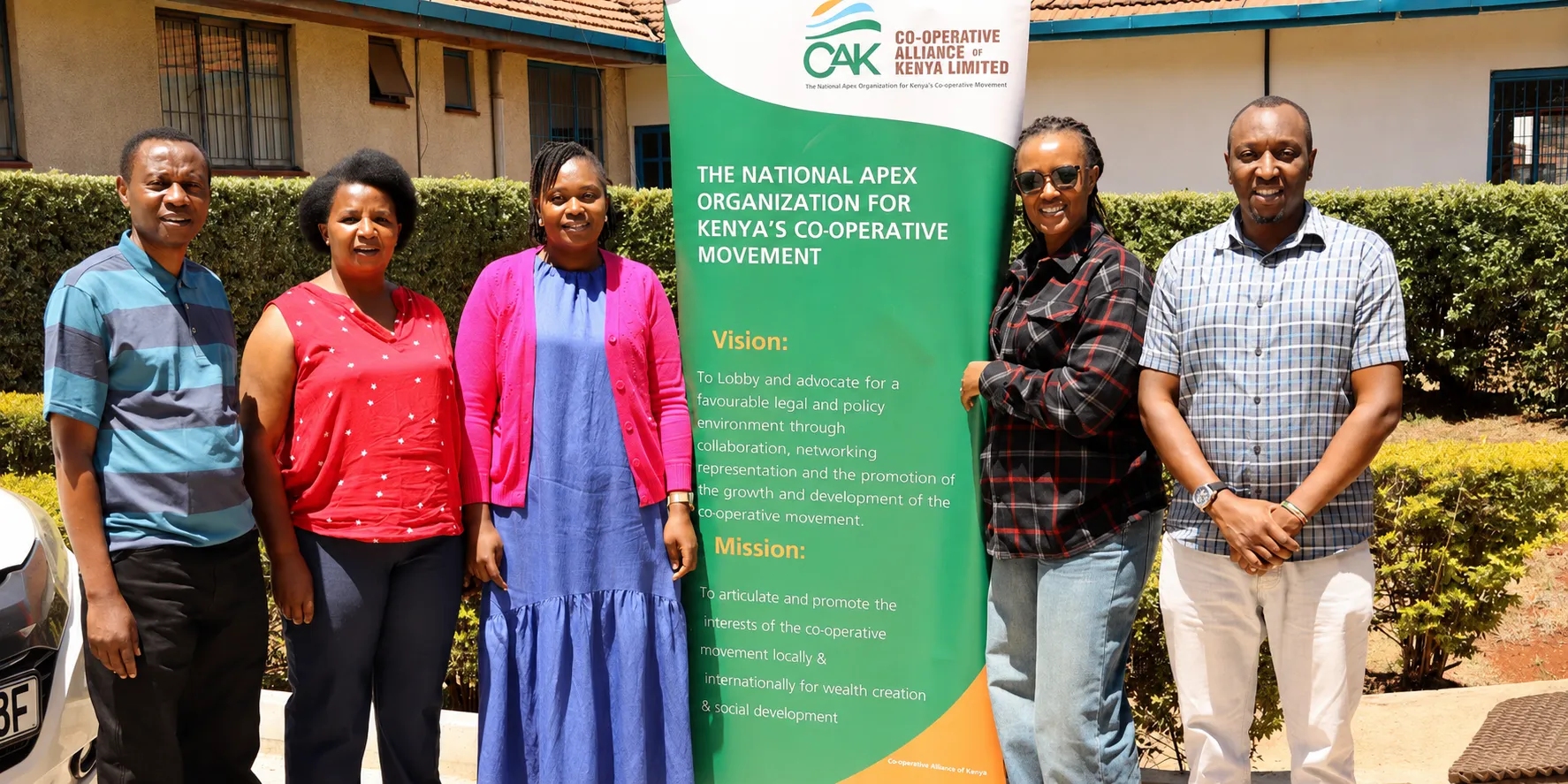
Photo courtesy: Photo courtesy
A delegation from Rwanda's National Cooperatives Confederation of Rwanda (NCCR) and the Rwanda Institute of Cooperatives, Entrepreneurship and Microfinance (RICEM) visited the Co-operative Alliance of Kenya (CAK) offices in Nairobi on Wednesday, 26 August 2026, as part of a four-day study tour aimed at strengthening cooperation and knowledge exchange between the cooperative movements of Rwanda and Kenya.
The visit brings together leaders from two key institutions involved in promoting cooperative development in Rwanda, with the delegation seeking to learn from Kenya's established cooperative movement and explore areas of long-term institutional collaboration.
The four-day mission, running from 25 to 28 August 2026, was organized by NCCR in partnership with RICEM. It follows a resolution adopted during the 2025 RICEM General Assembly calling for a joint institutional study tour to enable the two institutions to learn from successful cooperative institutions in the region.
Learning from Kenya's cooperative movement
Kenya has one of Africa's most developed cooperative sectors, with a long history of cooperative organizations operating across different areas of the economy. The country's cooperative movement has also developed institutions supporting advocacy, education, training, research, capacity building and business development.
For the Rwandan delegation, the visit to CAK provides an opportunity to understand how Kenya's national cooperative umbrella organization operates and how it represents and supports cooperative societies.
The discussions are expected to cover areas including cooperative governance, membership services, advocacy, policy engagement, resource mobilization and institutional management.
The delegation is also expected to share experiences from Rwanda, making the visit a two-way exchange rather than simply an observation tour.
Strengthening institutional cooperation
The study tour is designed to go beyond learning about individual programmes. One of its main objectives is to strengthen institutional relationships between NCCR, RICEM and Kenyan cooperative organizations.
NCCR serves as the apex organization representing cooperatives in Rwanda, while RICEM focuses on cooperative education, entrepreneurship, microfinance, research, innovation and professional development.
Their collaboration during the study tour therefore brings together two important aspects of cooperative development: representation and advocacy on one hand, and education, research and capacity building on the other.
The institutions are looking to identify areas where they can work together with Kenyan counterparts through partnerships, knowledge exchange and professional development programmes.
Potential areas of collaboration include research, curriculum development, capacity building, cooperative education and exchange programmes.
Focus on governance and advocacy
A major area of interest during the visit is cooperative governance.
The delegation intends to examine how Kenya's cooperative umbrella organization is structured, how it engages its members and how it participates in policy discussions affecting the cooperative sector.
Advocacy remains an important responsibility for cooperative apex organizations because cooperatives operate within laws, regulations and policies that can significantly influence their ability to serve members and grow their businesses.
By learning from Kenya's experience, NCCR hopes to identify approaches that could contribute to strengthening advocacy and member representation within Rwanda's cooperative movement.
The delegation will also explore how cooperative organizations mobilize resources and maintain financial sustainability while continuing to provide services to their members.
Exploring digital transformation
Digital transformation is another key theme of the study tour.
Cooperatives across Africa are increasingly looking for ways to use technology to improve service delivery, member engagement, record management and access to financial and business services.
NCCR and RICEM are interested in understanding how Kenyan cooperative institutions are responding to this changing environment and what lessons Rwanda can draw from Kenya's experience.
The discussions are expected to consider innovation and the use of digital tools as part of efforts to make cooperative organizations more efficient and responsive to members.
Cooperative education and research
The delegation will also visit the Cooperative University of Kenya as part of the mission on Thursday, 27 August 2026.
The university visit will focus on cooperative education, research, entrepreneurship and academic partnerships.
For RICEM, which seeks to become a leading regional institution in cooperative education, research, innovation and professional development, the engagement presents an opportunity to examine Kenya's experience in developing cooperative-focused academic and professional programmes.
Discussions are expected to cover curriculum development, research programmes, capacity building and opportunities for academic and professional exchange.
Such cooperation could provide a foundation for future partnerships between institutions in Rwanda and Kenya, particularly in developing skills and knowledge needed to support modern cooperative enterprises.
Building regional partnerships
The study tour reflects a broader recognition that cooperative movements across Africa can benefit from learning from one another.
While Rwanda and Kenya have different cooperative structures and operating environments, they share common objectives around improving member welfare, strengthening cooperative businesses and using cooperatives to contribute to inclusive economic development.
The visit therefore provides an opportunity to identify practices that can be adapted to the Rwandan context rather than simply copied.
The mission is expected to result in practical recommendations, potential partnership arrangements and an action plan for implementing selected lessons in Rwanda.
A comprehensive mission report will also document the findings, lessons learned and recommendations from the four-day programme.
A foundation for future cooperation
The study tour is being fully facilitated by RICEM in line with its administrative and financial procedures. The support reflects the longstanding relationship between RICEM and NCCR, with NCCR being among the founding institutions of RICEM.
The mission also represents the implementation of the resolution adopted during the 2025 RICEM General Assembly.
For both institutions, the visit provides an opportunity to strengthen their understanding of Kenya's cooperative ecosystem while establishing relationships that could continue beyond the four-day programme.
As the delegation engages with CAK and other Kenyan cooperative institutions, the focus will remain on identifying practical ideas that can strengthen governance, education, innovation, advocacy and cooperative business development.
The visit is therefore not only about understanding what Kenya has achieved. It is also about creating a platform through which Rwanda and Kenya can share experiences, develop partnerships and collectively contribute to the growth of Africa's cooperative movement.
The delegation is scheduled to conclude its Nairobi programme on 27 August before returning to Kigali on 28 August 2026.