
Fit-for-purpose Cooperative Leadership Is New Test For Boards
By Fred Aminga Wednesday, 9th September 2026
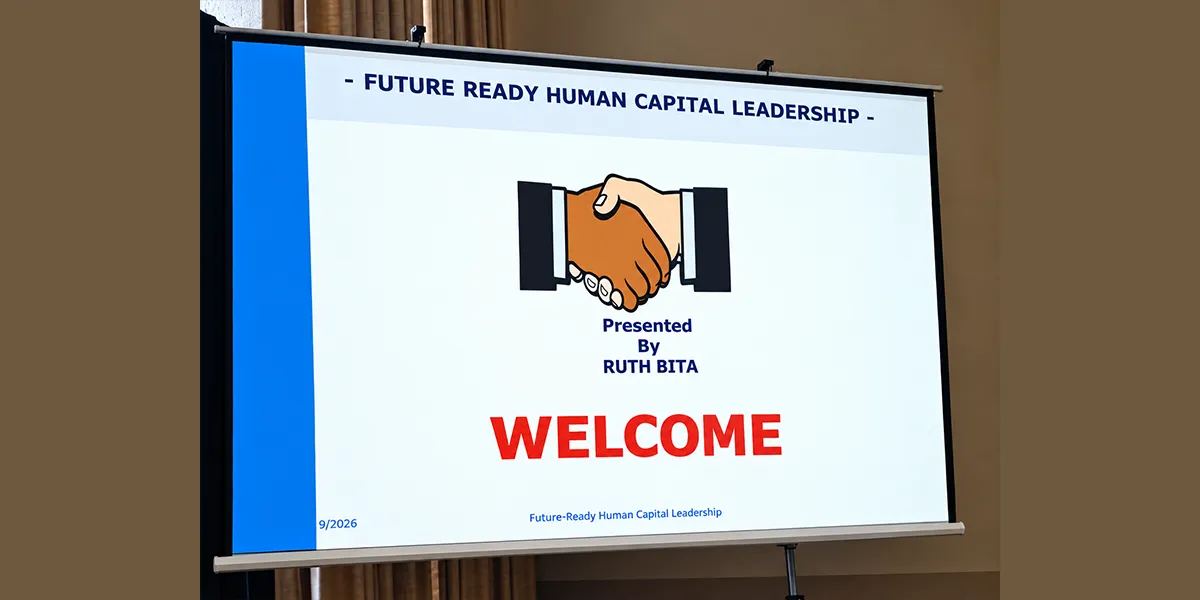
Photo courtesy: Photo courtesy
Kenya’s cooperative movement has grown into a powerful pillar of the economy, but its continued success will depend increasingly on the quality of leadership steering it through a rapidly changing financial and technological environment.
According to For Ruth Bita, who was the lead moderator during the Cooperative Alliance of Kenya (CAK) future ready saccos and cooperative forum: the challenge facing cooperatives is no longer about raising more capital, expanding membership or increasing dividends. It is about whether those entrusted with member-owned institutions possess the skills required to manage increasingly complex organisations.
“The biggest threat to the Sh250 billion Kenyan cooperative sector is not a fluctuating economy, inflation, or fintech competition. The single greatest threat is obsolete leadership,” Bita says.
This warning comes at a time when cooperatives, particularly Savings and Credit Cooperative Societies (SACCOs), are operating in an environment dramatically different from the one in which many of their governance structures were established. Members now expect instant digital services, competitive financial products, transparency, professional investment management and the ability to transact conveniently from their phones.
However, governance in some cooperatives continues to be shaped by traditional approaches in which leadership positions can be influenced more by popularity, personal networks and length of association than by technical competence.
“Many cooperative boards are leading 21st-century digital-first financial networks using a mid-20th-century mindset,” Bita says.
The consequences of such a mismatch can be significant as cooperatives increasingly make decisions involving technology investments, property development, financial markets, cybersecurity, credit risk, data protection and sophisticated partnerships. These are areas that require directors to understand both the opportunities and risks before committing members’ money.
Speaking at the forum CAK chief executive officer said that “the cooperative movement must listen to the ground.” Confessing that the framework of most boards is likely affected by the other forces, he urged participants who included board members and directors that their role is to act for the best interest of the institutions they represent.
Bita argues that the modern cooperative leader must therefore see beyond the traditional image of a cooperative as primarily a welfare organisation.
“A fit-for-purpose leader must look at the cooperative model not as a static welfare club, but as a hyper-efficient, purpose driven corporate engine,” she says.
That transformation requires boards to become more deliberate about the competencies they need around the table. Financial literacy, strategic planning, technology, risk management, governance, investment analysis and regulatory knowledge should become central considerations when identifying and electing directors.
“Fit for purpose leadership means your board has the financial and technological acumen to ensure that your investments protect member capital rather than subsidize expensive corporate failures,” Bita says.
The argument is particularly important because cooperative institutions ultimately manage the savings and investments of ordinary members. Poor decisions are therefore not merely corporate miscalculations; they can directly affect household finances, retirement plans and community development.
The answer, according to Bita, is to rethink how cooperative leaders are selected.
“This means moving away from popularity contest elections and transitioning toward formalized competency frameworks,” she says.
Such frameworks would not necessarily undermine democratic member participation. Instead, they could strengthen it by ensuring that candidates seeking board positions meet clearly defined minimum standards while members retain the power to choose among qualified candidates.
The future of Kenya’s cooperative movement may consequently depend on a new generation of leaders capable of combining the values of solidarity and member ownership with the discipline of modern corporate management.
For Kenya’s cooperatives, being fit for purpose is no longer an option but a prerequisite for protecting member wealth, sustaining trust and competing in the financial economy of the future.