
Airtea Third-party Close-out (capitalization) Meeting At Musanze, Rwanda: Reflecting On Agricultural Innovation And Rural Transformation
By Admin
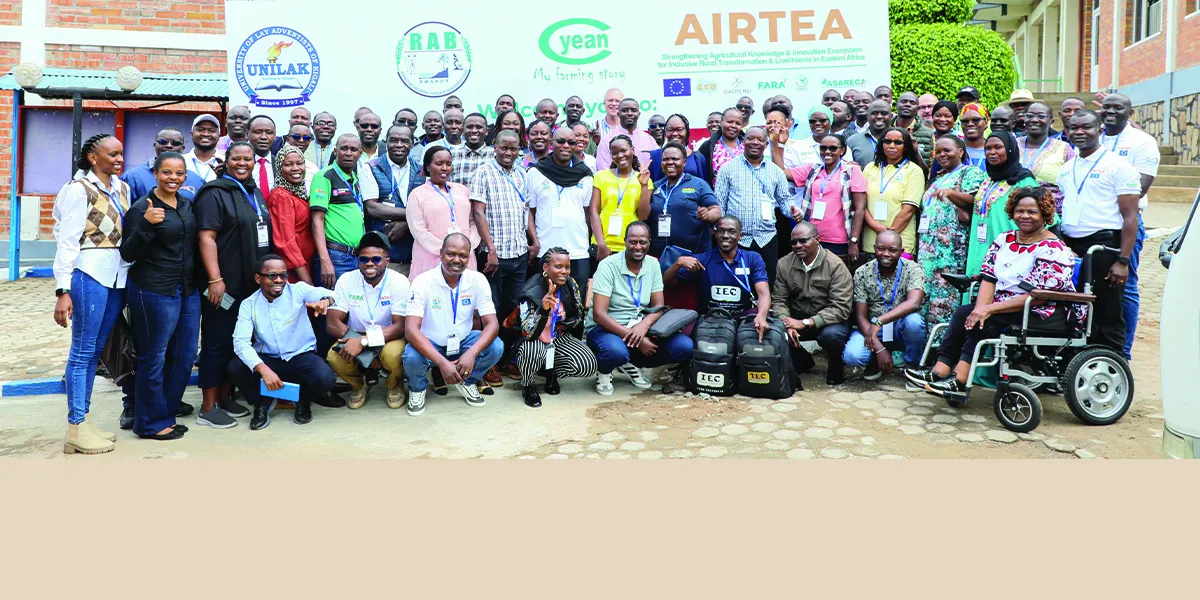
The AIRTEA Third-Party Close-Out (Capitalization) Meeting, held in Musanze, Rwanda from March 24th to 28th, 2025,
marked a significant milestone in agricultural innovation and rural transformation efforts across East Africa.
This crucial event was coordinated by the Forum for Agricultural Research in Africa (FARA),
the Association for Strengthening Agricultural Research in Eastern and Central Africa (ASARECA),
and the Eastern Africa Farmers Federation (EAFF).
The AIRTEA Project, funded by the Organisation of African, Caribbean, and Pacific States (OACPS) through the European Union-backed ACP-Innovation Fund,
has been instrumental in fostering youth and women empowerment, enhancing technology transfer, and improving agricultural profitability
in Kenya, Rwanda, and Uganda.
The AIRTEA Project has been a game-changer in advancing agricultural productivity and sustainability in East Africa.
Through a competitive grants scheme, third-party projects have been funded to enhance various agricultural value chains,
including aquaculture, crops, livestock, and information and communication technology (ICT).
The primary objective of these initiatives has been to create a more inclusive and profitable agricultural ecosystem,
particularly for marginalized groups such as youth and women.
Among the key third-party implementers of this project is the Co-operative Alliance of Kenya (CAK),
which has played a pivotal role in leveraging multi-stakeholder partnership (MSP) benefits to improve the profitability of rural women and youth
in the dairy sector. Their targeted intervention focuses on Kirinyaga, Embu, Nyeri, and Nyandarua counties in Kenya,
where dairy farming serves as a key economic activity.
The capitalization meeting in Musanze provided a platform for key stakeholders to reflect on the progress made through the AIRTEA third-party projects,
share best practices, and evaluate the overall impact of the initiative on the agricultural sector in East Africa.
The event convened representatives from funding agencies, implementing partners, farmers’ organizations, policymakers,
and other relevant stakeholders to engage in knowledge-sharing and strategy development.
This forum was essential in ensuring that the lessons learned from the project are effectively documented and disseminated
to inform future agricultural initiatives. Additionally, discussions focused on scaling up successful innovations
and strengthening partnerships to sustain the progress achieved through the AIRTEA initiative.
Participants had the opportunity to showcase the successes achieved in their respective projects. Among the notable achievements were: The meeting provided an opportunity to analyze both successes and challenges encountered throughout the project implementation. Key lessons shared included: Ensuring the sustainability of the AIRTEA project’s impact was a core focus of the discussions. Some of the key strategies proposed included:
The AIRTEA Third-Party Close-Out (Capitalization) Meeting in Musanze was a landmark event that underscored the achievements
and transformative impact of the initiative. The collaborative approach adopted by FARA, ASARECA, EAFF,
and implementing partners such as CAK has paved the way for a more resilient and profitable agricultural sector in East Africa.
As stakeholders move forward, the emphasis will be on ensuring that the knowledge and innovations generated through this project
are sustained and scaled to benefit a broader spectrum of farmers across the region.
Strengthening partnerships, policy advocacy, and investment in agricultural research and technology
will be fundamental in achieving long-term agricultural transformation in Africa.
This event not only celebrated the milestones achieved but also reaffirmed the commitment of stakeholders
towards fostering inclusive agricultural development that empowers communities, drives economic growth,
and enhances food security in the region.
Overview of the AIRTEA Project
Purpose of the Capitalization Meeting
Key Highlights of the Event
1. Success Stories and Impact on Agricultural Value Chains
2. Lessons Learned and Best Practices
3. Strategies for Sustainability and Scale-Up
Conclusion and Way Forward